Most brands say they care about sustainability. Few actually change how they communicate. Sustainable digital signage is where that shift becomes real. It replaces wasteful, static displays with energy-efficient screens and smarter systems designed to reduce environmental impact at every stage.
This is not just about going green. It is about working smarter. Sustainable digital signage helps you cut printing costs, reduce operational overhead, and present a brand that customers trust and respect.
The evolution is clear. Businesses moved from traditional signage to digital displays, and now they are moving again toward solutions built with sustainability at their core.
In this guide, we will break down what sustainable digital signage really means and why it matters. You will learn how it works, the benefits it delivers, and how to implement it in a way that drives both impact and results.
What is sustainable digital signage?
Sustainable digital signage is a way of using digital displays that actively reduces environmental impact. It goes beyond simply replacing printed signs with screens. A truly sustainable approach considers the full lifecycle of your signage, from the energy your screens use to the materials they are made from and how long they last before replacement.
At a basic level, digital signage allows you to display content on screens instead of printing posters or banners. Sustainable digital signage builds on that foundation.
Sustainable digital signage focuses on:
Using energy-efficient hardware
Reducing physical waste
Managing content in a way that minimizes unnecessary consumption
The difference matters. Standard digital signage can still waste energy if screens run at full brightness all day or stay on overnight. Sustainable digital signage uses smarter systems. These include features like automated scheduling, brightness adjustment, and remote management to reduce energy use and extend the life of your equipment.
There are three core components to understand in sustainable digital signage:
Energy efficiency - which comes from modern displays and smart power management.
Waste reduction - achieved by eliminating printed materials and reducing the need for replacements
Lifecycle management - which focuses on using durable hardware and maintaining it over time instead of discarding it early.
One important point often gets overlooked. Digital signage is only sustainable if it replaces traditional print. If you continue printing the same materials while also running digital screens, you are increasing your environmental footprint, not reducing it.
Why sustainability in digital signage matters
Sustainability in digital signage is not just a trend. It directly impacts your costs, your brand, and your environmental footprint. Here are the key reasons it matters.
1. It reduces environmental impact
Digital signage still consumes energy, and poorly managed screens can drive up power usage. Older hardware also contributes to electronic waste when it gets replaced too often. A sustainable approach focuses on energy efficiency, longer lifespans, and reducing unnecessary consumption.
2. It aligns with Environmental, Social, and Governance (ESG) and brand expectations
Customers and stakeholders expect businesses to operate responsibly. Sustainability is no longer a bonus. It is part of how people judge your brand. When your signage reflects eco-conscious choices, it reinforces your values in a visible, credible way.
3. It matches changing consumer behavior
Modern consumers pay attention to sustainability. Many prefer brands that reduce waste and lower their environmental impact. When your physical spaces reflect those values, you build trust and stay relevant.
4. It lowers operational costs
Sustainable digital signage is efficient by design. Energy-efficient displays, automated scheduling, and reduced printing all lead to lower ongoing costs. You spend less on electricity, materials, and manual updates.
5. It strengthens your brand positioning
Sustainable digital signage helps you show, not just tell. It turns your commitment into something customers can see every day. That makes your brand feel modern, responsible, and aligned with what matters now.
The problem with traditional signage
Traditional signage involves static displays like banners, posters, and billboards used to disseminate information to the public. It is made from materials such as paper, plastic, or vinyl. The dark side of traditional signage is:
Traditional signage depends on paper-made products, which when discarded can create landfill waste and further strain our planet’s resources.
Traditional signage often contains plastic and vinyl, which are non-eco-friendly. When disposed of, they remain in landfills for years, polluting soil and waterways.
The production process involves the utilization of toxic chemicals that are harmful to the environment.
The products from traditional signage, like plastic, can contribute to environmental pollution because they don’t degrade, resulting in continuous waste generation.
Traditional signage can be expensive to maintain due to exposure to weather and dirt. The ones made with metal or wood often require repainting or repairs due to rust or wear.
Traditional signage cannot be updated remotely.
It is unpredictable due to weather, vandalism, and other external forces.
Traditional signage made sense in the past, but it struggles to meet modern demands. That is exactly where sustainable digital signage offers a better path forward.
6 key benefits of sustainable digital signage
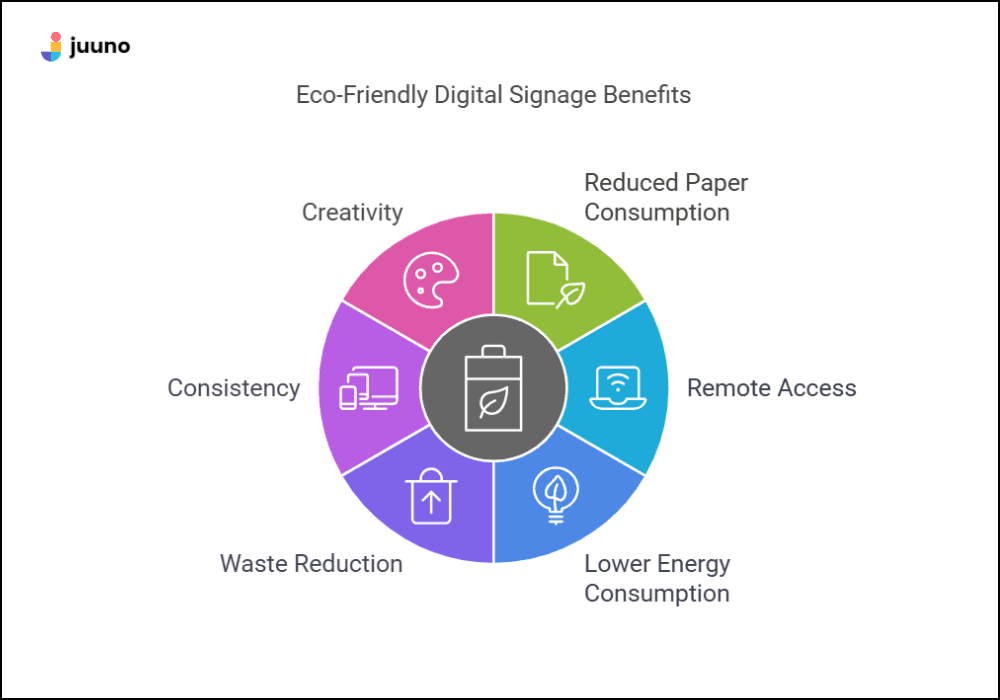
Digital signage supports eco-friendly branding, and it stands out for its ability to minimize environmental impact and champion sustainability. The key benefits of eco-friendly digital signage are:
1. Reduced paper consumption
Digital signage obliterates the need for printed materials like paper since messages are displayed on the screen. Instead of printing countless flyers or placing billboards in different locations, one screen can handle multiple campaigns at once.
Businesses that switch to menu display software can eliminate printed menus entirely and update content instantly.
This shift conserves trees and reduces the energy required for paper production. It also removes the ongoing need to print, ship, and replace materials.
2. Remote access
With digital signage, you can control what’s on your screen from your computer wherever you are. You can update content instantly without traveling to each location.
This saves time and reduces the need for transportation. It also makes your operations more efficient and easier to manage at scale.
3. Lower energy consumption
Digital signage uses less energy than traditional signage when managed correctly. Modern displays include features that improve efficiency, such as scheduled on and off times.
Businesses benefit from lower energy bills while reducing their carbon footprint. Small changes in how screens run can lead to meaningful savings over time.
4. Waste reduction
You do not need paper to use digital signage. Everything runs digitally, which reduces physical waste and emissions.
One person can manage multiple displays across locations without producing new materials. Content can be updated as often as needed without creating additional waste.
5. Consistency
Digital signage allows you to display the same content across multiple screens at the same time. You can also tailor content for different locations while keeping your messaging aligned.
This helps businesses launch promotions and updates without delays. It keeps branding consistent across every touchpoint.
6. Creativity
Digital signage gives you more room to experiment with content. You can display animation, text, live TV, and real-time updates.
This flexibility helps you capture attention and keep content fresh. It also allows you to communicate in ways that static signage never could.
Sustainable digital signage technology: what makes it “green”?
Sustainable digital signage is not just about using screens instead of paper. The real impact comes from the technology behind those screens and how you manage them over time. The right setup reduces energy use, extends hardware life, and cuts down on waste without sacrificing performance.
Here are the key technologies that make digital signage truly sustainable:
Energy-efficient displays (LED and e-paper)
Modern LED screens use far less power than older display types while maintaining strong brightness and clarity. E-paper displays go even further by using minimal energy, especially for static content.Auto-brightness sensors
Screens can adjust brightness based on ambient light. This reduces unnecessary power usage during the day and prevents screens from running at full intensity when it is not needed.Smart scheduling and power management
You can automatically turn screens off during nights, weekends, or low-traffic periods. This simple change significantly reduces energy consumption and extends the lifespan of your displays.Cloud-based content management
Cloud systems remove the need for complex on-site infrastructure. You can manage content remotely across all locations, which reduces hardware requirements and simplifies operations.Modular hardware design
Instead of replacing an entire screen when something fails, modular systems allow you to repair or swap individual components. This reduces electronic waste and lowers long-term costs.Long lifecycle displays
High-quality digital signage hardware is built to last for years. Fewer replacements mean less waste and a smaller environmental footprint over time.Remote updates and maintenance
You can update and manage screens without traveling to each location. This reduces transportation needs and keeps your system running efficiently with minimal effort.
When you combine these technologies, sustainable digital signage becomes more than a concept. It becomes a practical system that reduces impact while improving how your business communicates.
The role of cloud-based digital signage in sustainability
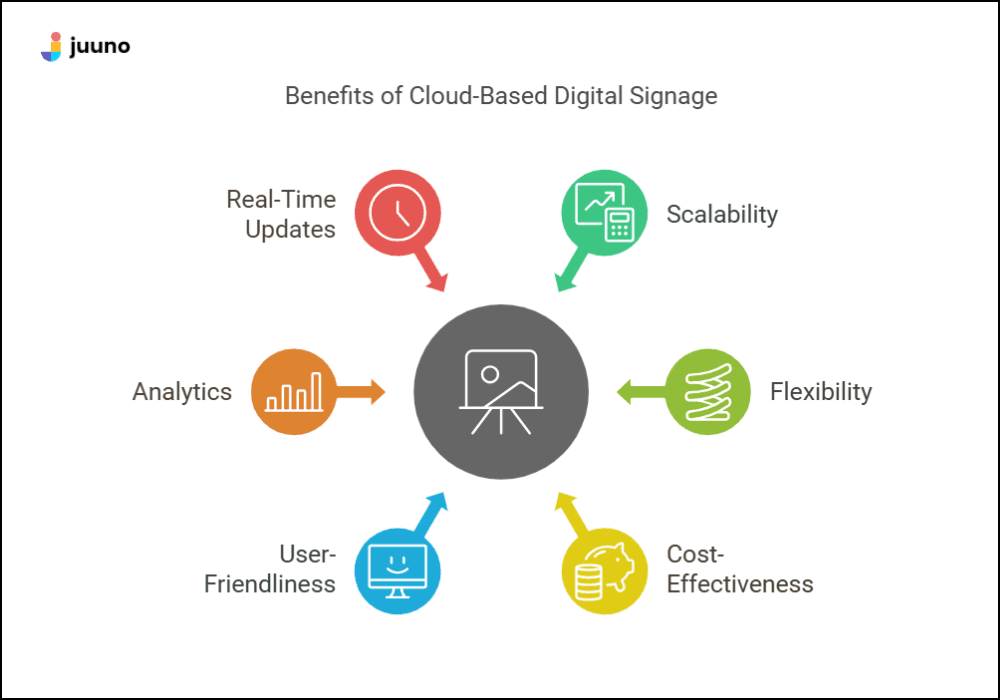
Cloud-based digital signage solutions have gained popularity as a result of their eco-friendly features, especially when paired with the right digital signage software. They operate using remote servers and reduce the need for physical infrastructure compared to traditional signage systems. This makes them a core part of any sustainable digital signage strategy.
By centralizing control and reducing hardware requirements, cloud-based systems help businesses lower energy use, simplify operations, and minimize waste across locations.
The following are some of the advantages of using cloud-based digital signage:
Scalability
Cloud-based digital signage allows businesses to easily add or remove displays. You can scale your network without investing in new infrastructure, which reduces unnecessary hardware and supports long-term sustainability.
Flexibility
You can access cloud-based digital signage from any location with an internet connection. This makes it easy to update content across multiple sites without physically interacting with each screen.
Less expensive
Cloud-based systems reduce costs by removing the need for expensive on-site hardware. You can run your signage through existing devices, which lowers both upfront investment and ongoing maintenance.
User-friendliness
Cloud-based digital signage is easy to use. Teams can create and update content without technical support, which reduces friction and keeps operations efficient.
Analytics
Cloud platforms provide built-in analytics tools. You can track performance, monitor engagement, and optimize content without additional systems.
Real-time updates
You can update content instantly across all screens. This ensures your messaging stays relevant without producing new materials or sending teams on-site.
When combined, these features make cloud-based systems a foundation for sustainable digital signage. They reduce hardware needs, centralize control, and allow businesses to operate more efficiently with less environmental impact.
Best practices for implementing sustainable digital signage
Sustainable digital signage does not happen by default. You need to make intentional choices in how you set up and manage your screens. Small changes in configuration and strategy can make a significant difference over time.
Use scheduling to control screen usage
Set your displays to turn off during nights, weekends, or low-traffic hours. Running screens only when needed reduces energy consumption and extends the life of your hardware.Optimize brightness settings
Avoid running screens at full brightness all day. Adjust brightness based on your environment so displays stay visible without using unnecessary power.Use darker content themes where possible
Darker backgrounds and simpler visuals require less energy, especially on LED screens. This is an easy way to reduce power usage without changing your messaging.Replace print fully, not partially
Commit to digital signage as a replacement for printed materials. Running both at the same time increases waste instead of reducing it.Choose energy-efficient hardware
Invest in modern displays designed for efficiency and long-term use. High-quality hardware lasts longer and reduces the need for frequent replacements.Monitor usage with analytics
Track how your screens are used and how often they run. Use this data to identify inefficiencies and make adjustments that improve performance and reduce waste.
When you follow these practices, sustainable digital signage becomes part of your operations, not just a one-time upgrade.
Common mistakes to avoid
Many businesses adopt digital signage with good intentions, but a few common mistakes can undermine their sustainability efforts. If you want your setup to be truly effective, you need to avoid these pitfalls.
Running digital and print at the same time
Digital signage only reduces waste when it replaces printed materials. If you continue printing alongside your screens, you increase your overall environmental impact instead of reducing it.Leaving screens on 24/7
Keeping displays running around the clock wastes energy and shortens their lifespan. Screens should only be active when they serve a purpose.Buying cheap hardware
Low-cost displays often fail sooner and need to be replaced more frequently. This creates more electronic waste and higher long-term costs.Ignoring energy settings
Features like brightness control and scheduling exist for a reason. Not using them leads to unnecessary power consumption and inefficiency.Claiming sustainability without data
Saying your signage is sustainable is not enough. You need to track energy usage, screen time, and performance to support your claims.
Avoiding these mistakes ensures your sustainable digital signage strategy delivers real impact, not just good intentions.
The future of sustainable digital signage
Sustainable digital signage continues to evolve as new technologies make it more efficient and easier to manage. What started as a shift away from print is now becoming a smarter, data-driven system that improves over time.
AI is playing a growing role. It can optimize screen brightness, adjust content based on real-time conditions, and automate scheduling to reduce energy use without manual input. This makes sustainability part of the system, not something you have to manage constantly.
E-paper displays are also gaining traction. These screens use very little power and work well for static or semi-static content. They offer a low-energy alternative for businesses that want to reduce consumption even further.
Digital signage is also becoming part of larger ecosystems. Smart cities use connected displays to share information efficiently while managing energy use across networks. Businesses can plug into similar systems to operate more intelligently.
Renewable energy integration is another step forward. Some setups now pair digital signage with solar power or other renewable sources, reducing reliance on traditional energy.
At the same time, analytics and ESG reporting are becoming standard. Businesses can track energy usage, measure impact, and prove their sustainability efforts with real data.
Conclusion
Sustainable digital signage gives businesses a clear path forward. It reduces waste, lowers energy use, and simplifies how you manage content across locations. At the same time, it cuts costs and improves efficiency, making it a practical upgrade as well as an environmental one.
More importantly, it strengthens how your brand shows up. Customers see a business that makes smarter choices and backs up its values with action. That matters more than ever.
If you want to move toward sustainable digital signage, the right tools make all the difference. Platforms like Juuno help you manage content, reduce complexity, and get more value from every screen without adding unnecessary overhead.
Frequently asked questions (FAQs)
What is sustainable digital signage?
Sustainable digital signage uses energy-efficient screens, smart software, and long-lasting hardware to reduce environmental impact. It focuses on lowering energy use, minimizing waste, and managing the full lifecycle of your signage.
Is digital signage really eco-friendly?
Digital signage can be eco-friendly when used correctly. It reduces the need for printed materials and ongoing waste. However, it only delivers real benefits when you manage energy use and replace print instead of running both.
Does digital signage use a lot of electricity?
Digital signage does use electricity, but modern systems are designed to be efficient. Features like scheduling and brightness control help reduce power consumption significantly compared to older display technologies.
How does digital signage reduce waste?
It removes the need for printed materials like posters and banners. You can update content digitally instead of producing new signage, which cuts down on paper, plastic, and transportation waste.
What is the most energy-efficient digital signage option?
E-paper displays are the most energy-efficient option for static content. For dynamic content, modern LED screens with smart power management offer a strong balance between performance and efficiency.
Is cloud-based signage more sustainable?
Yes, cloud-based signage supports sustainability by reducing the need for on-site hardware and enabling centralized control. It allows you to manage screens more efficiently and avoid unnecessary resource use.


Mike Hill is CEO and Co-founder of Juuno, a digital signage platform used across 20,000+ screens in 128 countries. Before Juuno, he spent over a decade running advertising agencies, including as CEO. Juuno is his third software product. He's hands-on across product, development, and customer support, and has worked directly with thousands of businesses on their digital signage setups.
