Lobbies are the first thing people encounter. Whether it is an office building, mall, airport, hotel, or any space where people meet and gather, the lobby makes the first impression and sets the tone for everything that follows.
That first impression matters more than most people realise. Research shows that 40% of consumers feel a bad lobby experience results in damaged brand perception. I have seen this play out firsthand across thousands of Juuno customers. The businesses that invest in their lobby displays consistently report stronger guest satisfaction and better brand recognition than those running blank screens or static printed signs.
Digital lobby signage lets you take control of that first impression. Done well, it turns a passive waiting area into an active communication channel that informs, engages, and reflects your brand. In this guide I walk through what digital lobby signage actually is, the best use cases, how to set it up, and the tools worth considering.
What is a digital lobby sign?
A digital lobby sign is an electronic display installed in your lobby or hallway. Programmed content is loaded onto the display to inform and engage visitors as they arrive.
These displays are created by combining a smart TV, tablet, or other digital screen with digital signage software. The software lets you create and schedule custom content tailored to your building or business. Based on data from over 5,000 active businesses on the Juuno platform, 77% of businesses run just one screen — which tells me that for most lobbies, a single well-placed display is all you need to start.
The benefits of digital lobby signs
Some of the key benefits of including digital signage in your lobby are:
Improves visitor experience: Dynamic and visually appealing content attracts attention and entertains visitors. News, weather and curated content engages visitors. Providing helpful information like building directory signage and wait times enhances the visitor's journey.
Improves corporate culture: Displaying internal communications such as company updates, upcoming events, and meetings keeps your employees informed. Public shoutouts for employee achievements, promotions and birthdays boosts morale. And, sharing the company’s history and mission can impart a sense of purpose.
Brand awareness: Displaying visually appealing branded content boosts brand awareness. Providing consistent messaging in lobby signs, hallway signs, and elsewhere also builds brand recognition.
Communication efficiency: The programmable nature of digital displays allows for real-time updates. Wait times, queue call numbers, short-term promotions and other time-sensitive information can be easily displayed and changed ensuring the right information is being shared at the right time.
Analytics: Digital signage allows you to obtain analytic data. This allows you to optimize your content and maximize its effectiveness.
Cost-effective: Digital signage saves on the printing costs of traditional signs. Programmatically changing content also reduces the labor costs of repeated sign installations.
Sustainability: Programmatically changing and updating your signs produces significantly less waste than printed signs.
4 common use cases for digital lobby displays
There are many use cases for digital signage. Here are some of the common ones for digital lobbies.
Welcome signs and notifications
Welcome signs are one of the most common uses of digital lobby signage, and for good reason. A warm, personalised welcome on arrival sets a positive tone immediately. You can pair welcome messages with directional information for guests, promotional content, or morale-boosting messages for employees arriving at the start of their day.
From our platform data, 8am is the most common schedule start time across all businesses, which lines up with exactly this use case — screens set to greet people as they walk in.
Queue management
Digital signage for managing queues is a game changer. First off, digital signage can reduce perceived wait times by over 35%. This can be done by providing content that distracts and entertains. This could be music videos, movies and TV shows, or news and weather updates (depending on who is in your queue of course).
Queue management itself is directly improved as well. With digital kiosks, your visitors can check-in and receive a spot in the queue instead of waiting in line. Overhead displays can inform them of who's being served and approximate wait times as well.
Wayfinding
Customers and visitors shouldn’t have to ask for directions. And employees shouldn’t have to waste their time telling people where to go. Utilizing digital signage for navigating the premises provides a convenience for everyone. The other benefit is the programmable nature of the signage makes it easy to update for special events, different times of the day, or based on crowd size.
Video walls
Video walls are a definite attention grabber. They utilize multiple screens to create captivating displays for ads, branding, live feeds, or artistic installations.
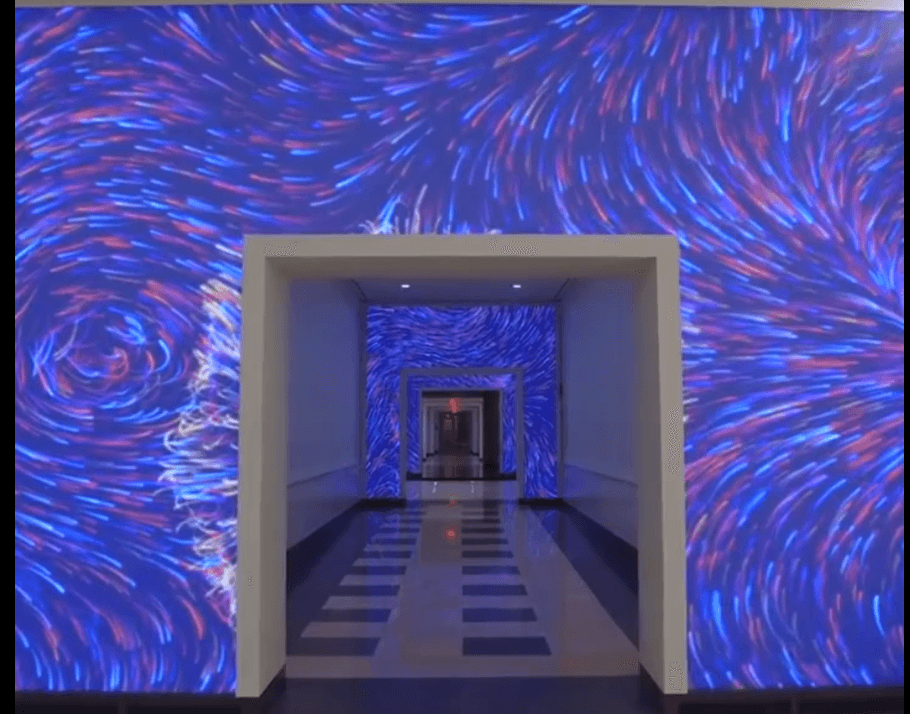
For example, Terell Place in Washington DC has gone all out in creating an interactive video wall in their lobby. Not only does it span the entirety of the wall, but it extends through the depth of the building. This creates a fully immersive and memorable experience.
Digital lobby signage in practice: How BLANKSPACES uses Juuno across their LA locations
BLANKSPACES is a well-known coworking network in Los Angeles with locations in Venice, Santa Monica, Hollywood, Century City, and La Brea. They run 18 screens across all five sites using Juuno, powered by a mix of Amazon Fire OS and Onn stick devices, and manage everything remotely from one account.
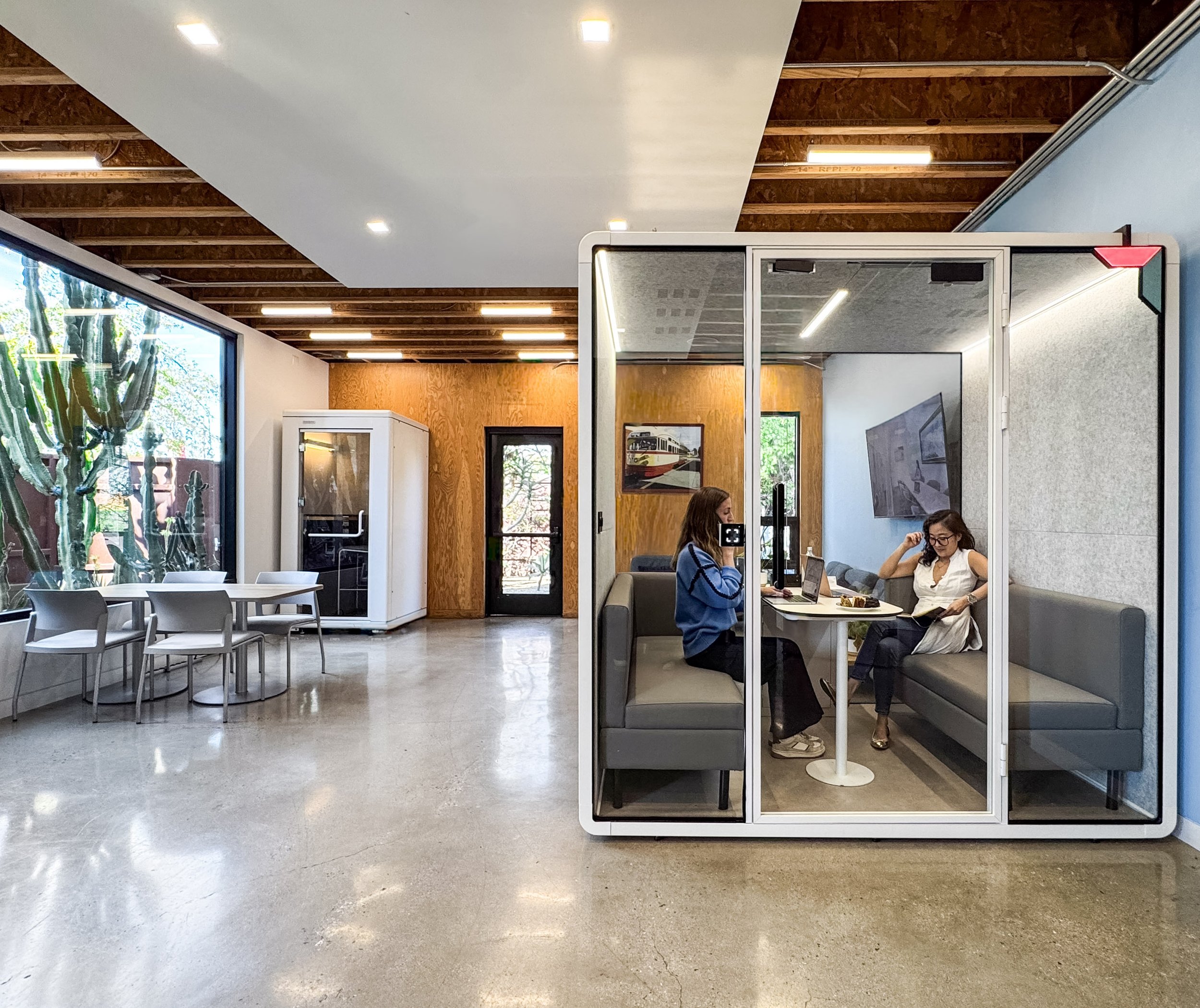
What makes this a useful example is the variety of placements. Across their locations they cover lobbies, front desks, hallways, conference rooms, a lounge, and an LED wall in Venice. Each screen serves a different purpose. Lobby screens set the tone on arrival. Front desk displays support the team with operational information. Conference room screens show booking details or welcome messages for whoever is using the space that day. The lounge screen at their Hollywood location promotes upcoming events and reflects the culture of the space.
The Century City setup is worth calling out specifically. They run two screens there, one in the ground lobby and one in the elevator lobby. The elevator placement gets more genuine attention per minute than almost anywhere else in a building. People are standing still with nothing to look at for 30 to 60 seconds, which makes it one of the most underused opportunities in lobby signage.
La Brea runs just one lobby screen, which is a good reminder that you do not need a large deployment to make a real impact. A single screen in the right place, showing the right content, is enough to create a strong first impression.
How to setup a digital sign in your lobby
The first step is always defining the purpose of the signage. What you want to communicate determines what features you need and how complex your setup should be.
I want to share a real example here. Hexx Design, a full-service creative agency in Battle Creek, Michigan, uses Juuno's white-label platform to add digital lobby signage as a service for their existing clients. They manage 20 screens across their client base, each taking around 60 seconds to provision. Their margin on the service is 75%. As Trevor Flak at Hexx put it: "It's the easiest 75% margin I've ever sold. It bundles into a retainer my clients already pay me — and they never even see the dashboard." That is a model I find genuinely replicable for any agency with clients who have lobbies.
Simple digital lobby display setup
Let's talk through the low-cost option first.
For most lobbies, a simple setup is all you need. Getting a screen live takes less time than most people expect, and you have several hardware options depending on what you already own and how much reliability you need.
You need:
A WiFi connection
A TV or display screen
A digital signage software subscription
A player: your TV's built-in browser, or a dedicated media player like an Amazon Fire TV Stick, Chromecast, or Amazon Signage Stick
Install your screen, connect your player, set up your content in the software, and launch. From there you can build out playlists, schedule content by time of day or day of week, and update everything remotely without visiting the screen.
A note on hardware: for a lobby that runs all day, I recommend a dedicated media player over relying on a smart TV's built-in browser. TV browsers can be inconsistent, and a $30 to $50 player you can pick up anywhere removes that variable entirely. Based on data from 5,000+ businesses on the Juuno platform, 1 in 5 screens runs on Amazon Fire TV, and dedicated players like the Amazon Signage Stick are increasingly popular for commercial installations. That said, browser-based setups work well for plenty of businesses and are a perfectly reasonable way to start.
Enterprise-level lobby display setup
For large organisations wanting elaborate multi-screen installations, interactive wayfinding, or check-in kiosks, the process starts with finding the right software for your specific requirements. Once you have identified the platform, work with their sales team on hardware specification and deployment. Enterprise vendors expect this conversation and will guide the setup.
Top 5 digital lobby sign tools
Here are the top lobby signage tools to consider.
1. Juuno
Juuno is the simplest and most affordable way to get a lobby sign live. Create a playlist, set a schedule, and push content to any screen — all from one dashboard you can access from anywhere. Setup takes minutes, not days.
Your playlists can include images, videos, and designing your own digital sign boards is easy with the native Canva integration. Juuno works with smart TV browsers and affordable dedicated players like Amazon Fire TV, Chromecast, and the Amazon Signage Stick, so you can use hardware you already own or pick one up anywhere for $30 to $50.
At $5 per screen per month with no setup fees and no hardware lock-in, the pay-per-screen pricing makes Juuno easy to budget, easy to scale, and easy to manage. I would recommend it as the first choice for any business running between one and twenty lobby screens that wants full control without enterprise complexity or cost. It is also the strongest option for agencies reselling lobby signage to clients, thanks to the white-label plan.
Pricing: The cost for Juuno is $5 per screen per month.
2. Userful
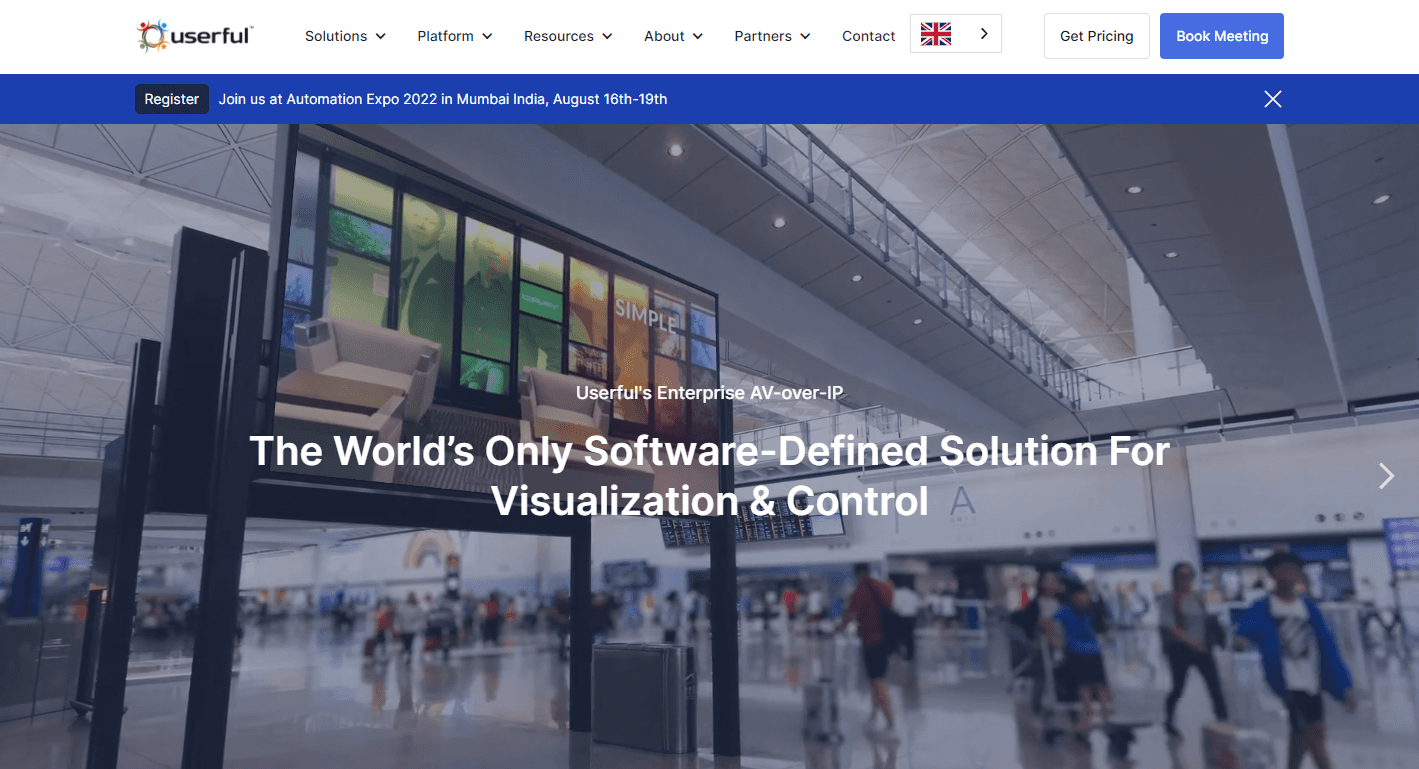
Userful is an enterprise-level platform designed for large, complex deployments. It handles data dashboard distribution, synchronised video walls, corporate communications, and collaboration environments, with both cloud and on-premise deployment options and automated failover for mission-critical displays.
If you are building an immersive multi-screen lobby installation or a command-centre-style display environment, Userful has the technical depth to support it. For a single lobby screen or a small office building, it is significant overkill. I would only consider Userful if your lobby ambitions include a video wall spanning multiple displays that need to operate in perfect sync.
Pricing: Userful is an enterprise-only platform. You’ll have to contact sales to learn about pricing options.
3. Rise Vision
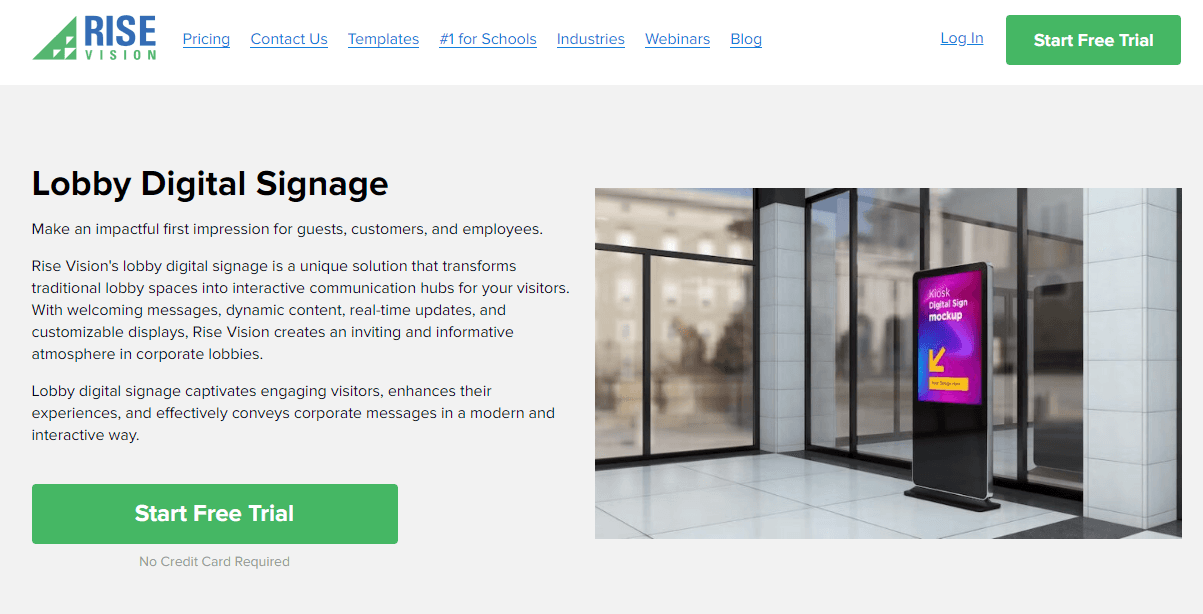
Rise Vision is a solid option for education environments, particularly K-12 schools, where the template library and pricing structure are genuinely well-suited to the use case. Auto-updating templates make it accessible for teachers and administrative staff who need quick, low-effort content solutions.
Outside of education, it becomes harder to justify over Juuno. The per-screen pricing is higher, the feature set is more limited, and the education-specific content is irrelevant in a commercial lobby. If you are a school, Rise Vision is worth a serious look. If you are not, start with Juuno.
Pricing: For k-12 schools, you’ll pay $999 per school per year for unlimited screens.
4. Screenly
Screenly is a reliable option for businesses that need offline playback or 4K resolution. The hardware player connects via HDMI and ensures content continues running even if internet connectivity drops, which is a genuine advantage in locations where network reliability is a concern.
The trade-off is cost. Every screen requires a Screenly Player starting at $219 on top of the monthly software subscription. At scale, that hardware spend adds up quickly. I would consider Screenly specifically if offline resilience is non-negotiable for your lobby environment. For most standard installations with stable WiFi, the hardware cost is unnecessary.
Pricing: The cheapest solution is $11 per screen per month when paid annually (not including hardware).
5. LobbyTV
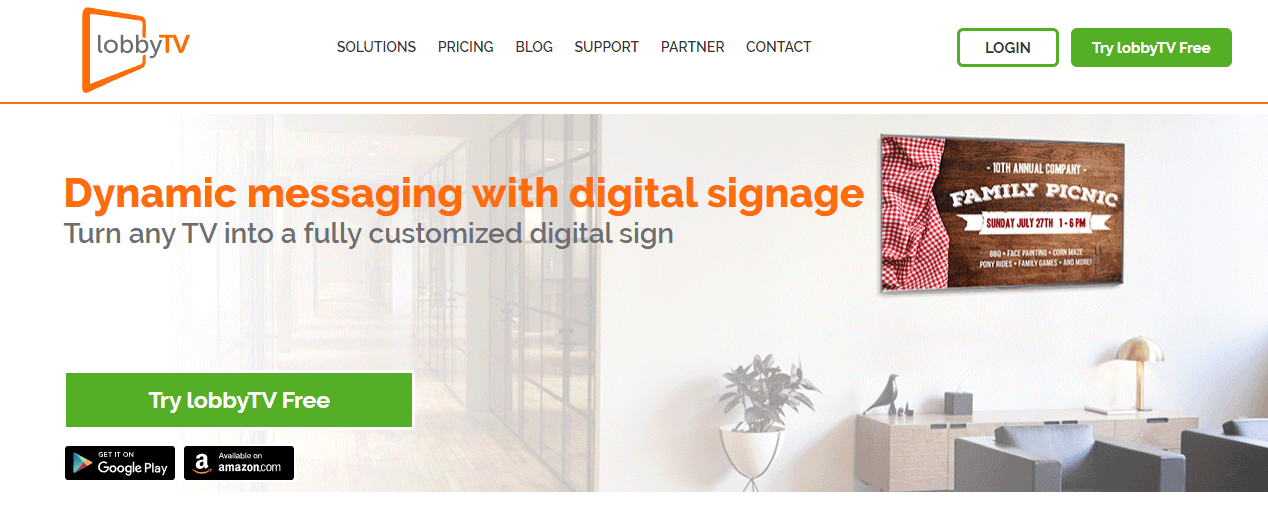
LobbyTV is purpose-built for lobby signage and keeps things deliberately simple. The CMS has a clean drag-and-drop interface, and the built-in radio station integration adds an audio dimension that most signage platforms do not offer. It requires a media player and limits multi-location management to enterprise plans.
It is a reasonable option for single-location businesses that want a lobby-specific tool and value the audio integration. For multi-location businesses or anyone who wants broader content flexibility, Juuno covers the same ground with more integration options and lower cost.
Pricing: LobbyTV’s pricing starts at $15 per month per screen for one location.
Frequently asked questions
Do I need special hardware to run a digital lobby sign?
Not for most setups. Based on data from 5,000+ businesses on the Juuno platform, 69% of screens run entirely through a web browser on a standard smart TV. A dedicated media player like an Amazon Fire TV Stick improves reliability for commercial use, but it is not a requirement to get started. For enterprise video walls or offline-resilient installations, dedicated hardware becomes more relevant.
How much content should I run on a single lobby screen?
Less than you think. Our platform data shows businesses average 5.5 slides per playlist, which is a sensible range for a lobby display. Too much content and visitors miss key messages before leaving the space. Focus on your most important two or three messages, keep slides readable from a distance, and rotate in secondary content around them.
Should I run the same content all day or schedule different content by time?
It depends on whether your visitor audience changes throughout the day. A medical practice with morning and afternoon patient groups benefits from different messaging at different times. An office lobby serving the same employee base all day probably does not need it. Only 8% of businesses on Juuno currently use time-based scheduling, which suggests most are running a single all-day loop — and for many lobby use cases, that is perfectly sufficient.
What orientation should I use for my lobby screen?
Landscape is by far the standard. Based on Juuno platform data, 92% of screens run in landscape orientation and only 8% in portrait. Portrait works well for specific use cases like narrow corridor displays or menu-style information boards, but for a general lobby screen, landscape is the safe default.
Can I manage lobby screens across multiple locations from one place?
Yes, with the right software. Most platforms on this list, including Juuno, let you group screens by location and push content updates to all of them simultaneously from a single dashboard. This is particularly useful for businesses like Hexx Design that manage signage across multiple client locations from one account.
Get started with digital lobby signage
Digital lobby signage improves the visitor experience and strengthens your brand's first impression. It does not have to be complicated or expensive. For most businesses, a single screen, a smart TV, and the right software is all it takes to get started.
Try Juuno, the most affordable and simplest solution for managing digital lobby signs.


Mike Hill is CEO and Co-founder of Juuno, a digital signage platform used across 20,000+ screens in 128 countries. Before Juuno, he spent over a decade running advertising agencies, including as CEO. Juuno is his third software product. He's hands-on across product, development, and customer support, and has worked directly with thousands of businesses on their digital signage setups.
