Nobody enjoys waiting. But a well-configured waiting room TV display can turn dead time into something genuinely useful for your patients and your business.
Healthcare waiting rooms carry a reputation: outdated magazines, restless shifting in chairs, the occasional anxious glance at a clock. You've seen it. Your patients live it. The good news? A waiting room TV display fixes more than boredom. It reduces anxiety, educates patients, communicates critical information, and quietly markets your services all at the same time.
This guide covers everything you need to know: what to show, how to manage it, and how to build a waiting room experience patients actually remember for the right reasons.
Why a waiting room TV display is a healthcare essential
A TV on the wall is table stakes. A strategic waiting room TV display is something else entirely.
Patients arriving at a healthcare facility are often stressed. They're worried about a diagnosis, a loved one, or simply how long they'll be stuck waiting. The environment you create directly affects how they feel, and research consistently links emotional state to health outcomes. What your screen shows is part of that environment.
Here's what waiting room digital signage actually does for your facility:

It reduces perceived wait time. Engaged patients don't watch the clock. Well-programmed content shortens the psychological experience of waiting, even when the actual wait stays the same.
It eases anxiety. Calm visuals, soothing music, and reassuring health content replace the mental vacuum that anxiety loves to fill. You're entertaining patients while actively managing their emotional state.
It educates. Your waiting room TV display is free real estate for patient education. Preventive tips, symptom explanations, nutritional guidance. Every minute a patient spends watching is a minute they're becoming better informed.
It communicates. Through these screens, healthcare facilities connect with their audience. You can pass important announcements, specialist schedules, and other relevant information. Modern healthcare app development agency solutions can further enhance this communication by enabling appointment reminders, virtual check-ins, and personalized health updates directly to patients' mobile devices.
It markets your services. Home care programs, telehealth options, new specialists, supplements and wellness products — your waiting room audience is captive and relevant. Use that.
Traditional signage can't do any of this well. Posters go stale. Brochures get ignored. A digital waiting room TV display is dynamic, updatable in real time, and infinitely more engaging than anything printed on paper.
To learn more details about cost, check our article on digital signage costs.
What to show on your TV: 8 content ideas that work

Great waiting room TV programming doesn't happen by accident. It starts with understanding your audience, then delivering content that serves them. Here are eight content categories that work.
1. Health education and preventive tips
This is your highest-value content category. Patients want to be healthy. Use your display to meet that want head-on.
Show preventive care tips, nutritional information, common symptom guides, and seasonal health alerts. During flu season, post hand hygiene reminders. In a pediatric clinic, feature child development milestones. Tailor it to your specialty and your patients will actually pay attention.
Good health content also builds trust. When patients learn something useful while they wait, they associate that value with your facility. Look through our great examples of content for digital signage.
2. Entertainment and relaxation content
Healthcare facilities don't have to feel clinical and cold. A little warmth goes a long way.
Calm nature scenes, ambient music playlists, and light lifestyle content soften the atmosphere without distracting from your brand. The key is matching the tone to your facility — a busy urban urgent care has a different vibe than a quiet rural family practice. Choose content that fits.
3. Appointment status and queue updates
One of the biggest sources of frustration in any waiting room is the unknown. How long will this take? Am I next?
Your waiting room TV display can answer that question in real time. Display queue numbers, estimated wait times, and appointment status updates directly on screen. This reduces front-desk interruptions and keeps patients informed, which measurably improves satisfaction even when the wait is long.
4. Wayfinding and directions
Large hospitals and multi-department clinics are legitimately confusing to navigate. Patients and visitors shouldn't need to stop three staff members before finding radiology.
Include facility maps, department directories, and step-by-step directions in your waiting room TV programming. This reduces the operational load on your team and makes visitors feel oriented and welcome from the moment they arrive.
5. Service promotion and branding
Your waiting room audience is already interested in healthcare. That makes them the perfect audience for your newest offerings.
Promote telehealth services, home care programs for older patients, specialist consultations, wellness products, and any service lines you're growing. Keep it helpful rather than salesy — frame promotions around patient benefit, not revenue. Done right, this doesn't feel like advertising. It feels like useful information.
Reinforce your brand with consistent colors, logos, and visual themes. Patients who see a cohesive brand presentation across every touchpoint — including the waiting room — develop stronger trust and loyalty.
6. Social proof and news
Patient testimonials are powerful. If patients leave positive reviews or share stories about your care, feature them on your display. Real people, real results — that's the most credible marketing you'll ever run.
Complement this with relevant news updates: weather forecasts, local health alerts, or community events. It signals that you're engaged with the world your patients live in.
7. Emergency alerts and announcements
When something urgent happens, you need every communication channel firing at once. Your waiting room TV display is one of them.
Digital displays update instantly. No printing, no distributing, no hoping someone reads the poster by the door. When an emergency protocol changes or a critical announcement needs to reach everyone in the building, your displays can carry that message in seconds.
8. Interactive and personalized content
Modern waiting room TV displays go beyond passive viewing. Touchscreens let patients check in, browse service information, or access patient education at their own pace. Gesture-based interfaces add another layer of engagement without requiring physical contact.
For facilities with diverse patient populations, multi-screen setups allow you to show different content in different areas simultaneously. A children's waiting area can run cartoons while the adult section shows health programming. Personalization at the facility level, running automatically.
Get more tips on designing the perfect digital sign board for better promotion and branding.
Waiting room TV advertising: what you can (and should) promote
Waiting room TV advertising often gets overlooked by healthcare facilities — which is a real missed opportunity.
Your audience is already in your ecosystem. They're primed to receive health-related messaging. And unlike a general media buy, your waiting room TV advertising reaches people with demonstrated interest in healthcare products and services.
Smart waiting room TV advertising promotes things patients genuinely need: supplements, wellness programs, preventive screenings, care memberships, or home health equipment. Keep the tone informational. Lead with patient benefit. The more helpful your advertising feels, the more effective it is.
You can also use your display to promote the facility itself — new providers, expanded hours, telehealth availability, or patient portal features. These are services your patients may not know about, and they're exactly what a well-positioned waiting room TV display should communicate.
How to manage your waiting room TV programming
Great content is only half the equation. Managing it effectively is the other half.
Start with a clear objective for each content zone on your display. Educational content, promotional content, queue updates, and entertainment each serve different purposes and should be scheduled with intention. Random or inconsistent waiting room TV programming undermines the patient experience rather than improving it.
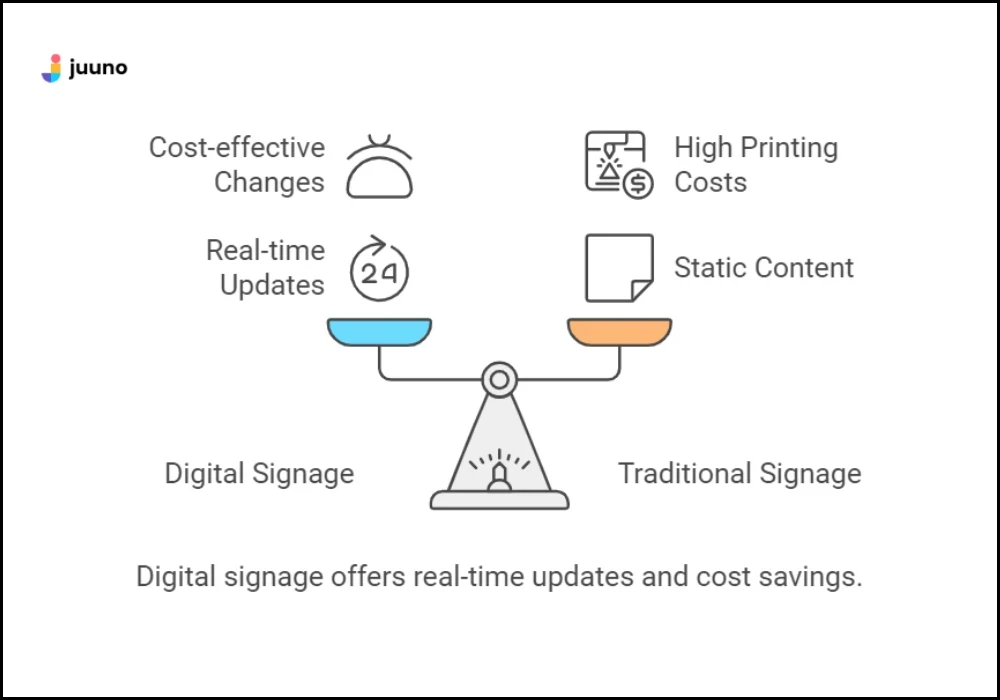
Invest in a solid content management system (CMS). A good CMS lets you update displays remotely, schedule content in advance, and push emergency alerts instantly. For multi-location facilities, it ensures brand consistency across every screen in every waiting room — without requiring someone on-site to manually update each display.
Set a content refresh cadence. Seasonal health tips, rotating promotions, and updated patient education keep your programming feeling current. Patients who visit regularly will notice when your content never changes — and not in a good way.
Finally, measure what's working. Modern digital signage platforms offer analytics on dwell time and engagement. Use that data to refine your waiting room TV programming over time.
Check our guide on the best digital signage content managers for more information.
Beyond the screen: building a waiting room that actually works
Your waiting room TV display is the most powerful tool in the room, but it doesn't work in isolation.
Start with the physical environment. Are your chairs comfortable? Patients arrive with ailments, injuries, and anxiety. Uncomfortable seating compounds every negative feeling. Ergonomic, clean, well-maintained chairs signal that you care about the patient experience before they ever see a provider.
Look at your color palette. Calm, neutral tones—soft blues, greens, and warm neutrals—create a restorative atmosphere. Harsh, clinical whites or loud, saturated colors do the opposite.
Consider the ambient audio. If your waiting room TV display includes audio, the volume and tone matter. Music should be low-key and unobtrusive. Avoid anything that feels jarring or overly promotional.
Lighting also shapes perception significantly. Warm, natural light makes patients feel more relaxed than harsh fluorescent overhead lighting. Small adjustments here have outsized effects on patient mood.
When all of these elements work together—the display, the furniture, the colors, the audio, the lighting—you don't just have a waiting room. You have a designed patient experience. That distinction is felt immediately by everyone who walks through your doors. To understand more about this, check out our article on digital signage analytics.
Making your waiting room TV display work for you
A waiting room TV display isn't decoration. It's a communication platform, an education channel, a marketing tool, and an anxiety management system all running simultaneously.
The facilities that get this right see real results: higher patient satisfaction scores, reduced perceived wait times, stronger brand loyalty, and more awareness of the services they offer. The facilities that get it wrong have a screen on the wall showing cable news at full volume. Don't be that facility.
Start with your objectives. Choose content that serves your patients. Build a management system that keeps it fresh. Then step back and watch your waiting room become something your patients genuinely appreciate.
Your waiting room is one of the most consistent touchpoints you have with patients. You might as well use it.
Looking for reliable and simple digital signage? Check out Juuno.


Thomas leads Juuno's backend — the unglamorous engineering that keeps 10K+ screens running across 128 countries without phoning home at 3am. A full-stack developer who's spent his career in the trenches at startups, advertising agencies, and creative boutiques — quietly fluent in whatever stack the moment requires. Based in Laguna Beach.
