If you're searching for a digital signage solution that matches your goals without the enterprise-level complexity or cost, you're in the right place. Our own platform data shows the average business runs just 2.1 screens. Most people comparing Scala alternatives aren't running the 500-screen enterprise rollout it's priced for.
Every screen I design a setup for, I ask what someone glances at from six feet away in two seconds. Scala's enterprise feature set solves problems most small businesses I work with don't actually have.
We've rounded up the top Scala alternatives, whether you're running a small business, managing a large corporate network, or building interactive kiosks for public spaces. These platforms offer a range of features, from plug-and-play simplicity to advanced data integrations and video walls.
Explore the list below to find the solution that fits your screens, your workflows, and your budget, no IT department required.
This update goes one step further: since Scala doesn't publish pricing anywhere, we've put a real number next to it at 10, 50, and 100 screens, along with a switching story from a business that made a similar move away from an enterprise-tier vendor. If you've already sat through a Scala sales call and want something concrete to compare it against, the numbers below should help.
What Scala actually costs (and why the number is hard to find)
Scala doesn't put a number on its website. Look for pricing and you'll find "contact sales" buttons across Capterra, GetApp, and Scala's own site, with nothing more specific than a request-a-quote form. That's a deliberate sales model for an enterprise product, but it leaves you guessing before you've even had a call.
Third-party cost benchmarking puts Scala's enterprise tier in the $20 to $30 per screen per month range, with some sources citing a rough $200-plus monthly minimum once a deployment actually gets underway.
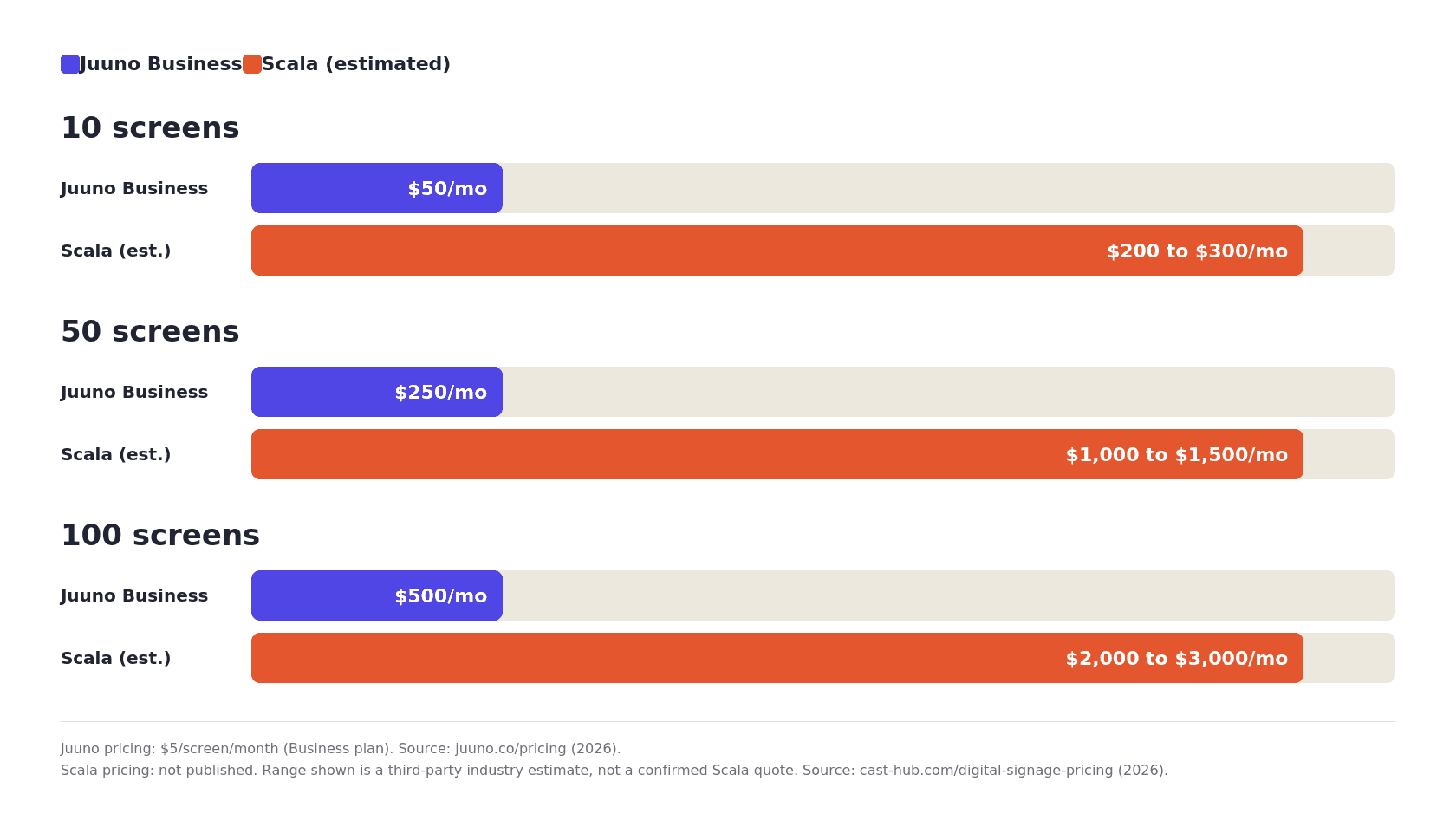
Here's how that estimate compares to Juuno's published rate at three deployment sizes:
Screens | Juuno | Scala (estimated) |
|---|---|---|
10 | $50/month | $200 to $300/month |
50 | $250/month | $1,000 to $1,500/month |
100 | $500/month | $2,000 to $3,000/month |
The gap widens as you add screens, mostly because Scala's pricing tends to bundle in capabilities most small and mid-size businesses never touch: on-premise deployment options, proprietary hardware, and audience-measurement integrations built for retail chains and stadiums. None of that makes Scala a bad platform. It's built for organizations running thousands of screens with dedicated IT staff on call. The cost only feels unreasonable if that's not the business you're running.
Every time I dig into an "enterprise pricing available on request" line, it tells me the same thing: the vendor doesn't want that number sitting next to a competitor's where anyone can compare them directly.
Why businesses actually switch away from Scala
Three reasons come up again and again when a business moves off an enterprise-tier platform like Scala. The sales and onboarding process assumes you already have an IT team on standby: a demo call, a scoping call, a deployment call, before a single screen goes live. The pricing stays opaque until you're deep into that process, so you can't budget against it the way you can against a published per-screen rate. And the features that justify the price, on-premise deployment, proprietary hardware, audience measurement, ship bundled in whether you need them or not.
One long-running Juuno customer, a waterpark and campground managing 40-plus screens across restaurants, retail spaces, and guest areas, was previously paying $25 per screen per month to an enterprise-tier signage provider, a similar cost bracket to the Scala estimate above. After switching to Juuno at $5 per screen, the business cut its annual signage software cost from roughly $9,000 to under $1,800, while adding more screens than it had before. The team now provisions a new screen in under 60 seconds using the Amazon Signage Stick, instead of managing a mismatched collection of legacy hardware.
"Most of the businesses I talk to don't need Scala's audience-measurement integrations or its on-premise deployment options. They need ten screens to work reliably and a bill they can predict every month." - Mike Hill, CEO and Co-founder, Juuno
Across Juuno's platform, 77% of businesses run exactly one screen, 18% run two to five, 5% run six to twenty, and under 1% run more than twenty.
If your deployment looks anything like that, you're not the business Scala's pricing was built around.
1. Juuno
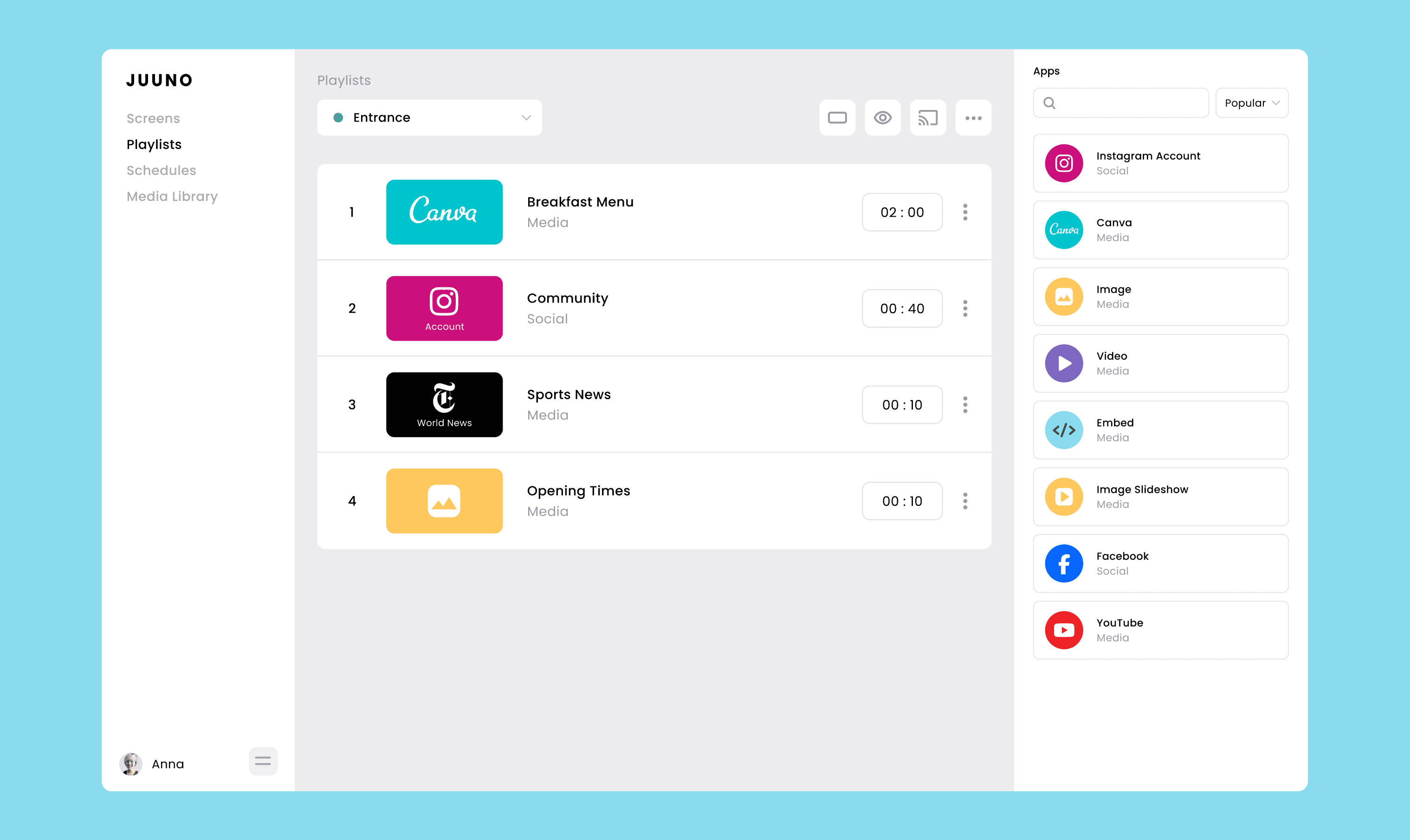
Juuno is a cost-effective digital signage solution built for small businesses that don't need the complexity or high overhead of traditional enterprise systems like Scala. You don't need specialized hardware to get started. A smart TV with a web browser can work, but TV browsers can be unreliable for signage that needs to stay up all day, every day. Most Juuno setups run instead on an affordable dedicated player, like the Amazon Signage Stick, Fire TV, Chromecast, or Raspberry Pi, with browser-only setup available as a fallback option rather than the default recommendation.
In the deployments I've reviewed, the businesses that lean on a smart TV's browser as their only setup are usually the ones calling support six months later asking why a screen went dark overnight.
The platform uses a simple, playlist-style workflow. Just choose the content you want to display (like your Twitter feed, team announcements, or promotional graphics), schedule when each piece should appear, and curate your feeds to keep everything on-brand. It’s intuitive and quick to master—perfect for business owners or office managers who don’t want to spend hours configuring tech.
Juuno is ideal for displaying menus, internal updates, social media highlights, or customer-facing content across a variety of industries, without the need for IT teams or extra hardware.
I've seen a lot of small businesses get quoted for Scala and quietly shelve the signage project entirely. That's exactly the gap a simpler, browser-based platform like Juuno is built to close.
Top features:
Works on any internet-connected TV, PC, or tablet (no extra hardware required)
Easy playlist-style content creation
Custom schedules for different days and times
Pull content from Twitter, Canva, and other integrations
Live feeds and real-time updates
Affordable monthly pricing
According to our data, 69% of screens on our platform run with no dedicated hardware, which is the single biggest cost gap versus Scala's proprietary media player requirement.
Pricing: Juuno's new pricing is just $5 per screen per month. From our platform research, our full customer base now manages 19,539 total screens across 5,000+ businesses, all at that same flat rate.
"Switching to Juuno was one of the best cost and headache-saving decisions we've made. It's the easiest to use and cheapest we've found." - Kris Green, Social Media Director, Splashway Waterpark & Campground
2. Userful
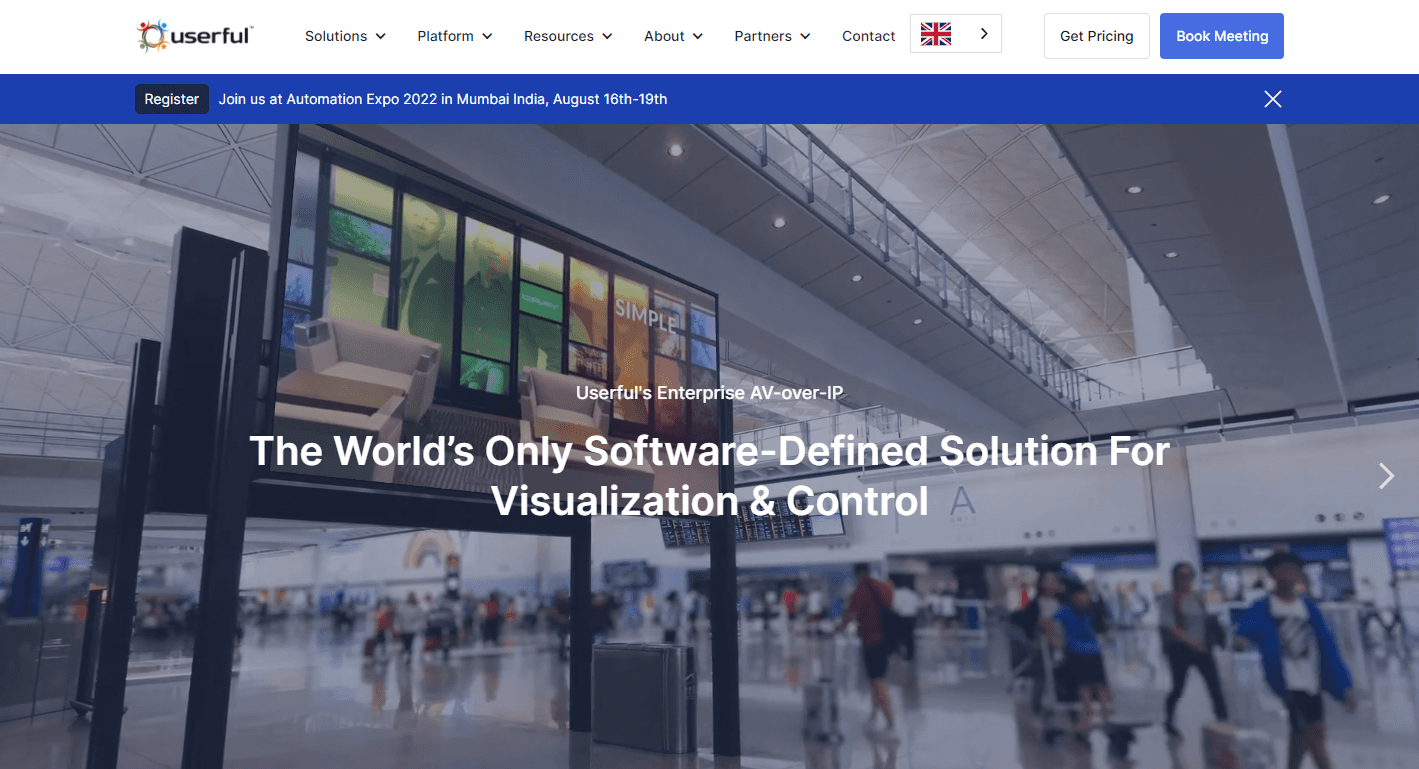
Userful is a comprehensive enterprise-grade platform designed for organizations that need more than just digital signage. It supports everything from large-scale video walls and real-time data dashboards to streaming and interactive content—all managed through a centralized interface. Built for IT teams and operations departments, Userful offers advanced deployment options, whether on-premise or in the cloud.
With features like automated failover, role-based access, API integrations, and enterprise-level security protocols, Userful is geared toward mission-critical environments. It’s not the right choice for smaller businesses or teams looking for a plug-and-play solution, but for large enterprises with complex requirements and IT infrastructure, it’s a serious contender.
Top features:
Supports unlimited content sources
Multi-screen and video wall management
Real-time diagnostics and uptime monitoring
Enterprise-grade security and access control
On-premise and cloud deployment options
REST API and automation support
Picture-in-picture and interactive viewer options
Drag-and-drop layout design
Pricing: Userful does not list pricing publicly. Enterprise customers can request a custom quote based on their scale and deployment needs.
3. TelemetryTV
TelemetryTV is a powerful digital signage platform designed with enterprises in mind. It’s built to scale, offering robust tools for managing content across multiple locations, user groups, and devices. The platform integrates with popular productivity and content tools such as Canva, YouTube, Google Drive, Office365, Slack, and Twitter—making it easy to pull in fresh, relevant content from your existing workflows.TelemetryTV stands out for its strong security credentials, including SOC 2 certification and fine-grained user permissions, which make it suitable for organizations with strict compliance requirements. It supports a wide range of operating systems including Android, Windows, ChromeOS, and Linux—and also offers its own custom OS and hardware, though that might not be necessary depending on your setup.While it’s packed with features, smaller businesses might find the pricing and hardware options more than they need. For a more lightweight, browser-based alternative, Juuno is worth exploring.
Top features:
Drag-and-drop interface for easy content creation
4K content playback
SOC 2-certified security and user access controls
App integrations for Canva, Google Drive, Slack, and more
Offline playback and uptime reporting
Support for a wide range of devices
Pricing: TelemetryTV starts at $18 per device per month for the Starter plan. The Plus plan, which includes advanced features like SAML and embeddable playlists, costs $35 per device per month (with a 10-device minimum). Enterprise pricing is also available upon request.4o
4. Omnivex
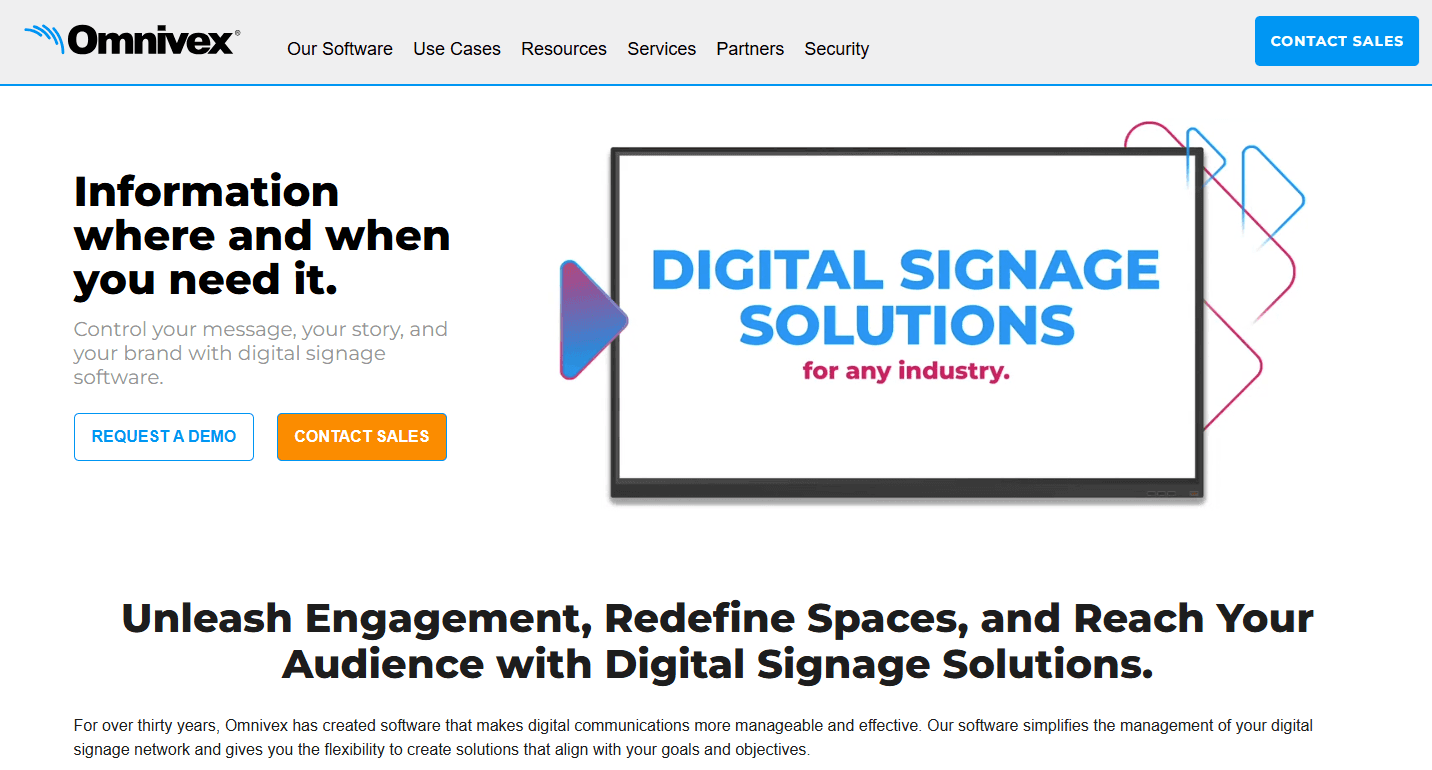
Omnivex is a digital signage platform built for enterprises that need flexible, scalable, and real-time communication tools. With over three decades of experience, Omnivex helps organizations present dynamic data across any screen—from lobby kiosks to multi-display video walls. Its software is designed to go beyond signage, offering a comprehensive solution for internal communications, customer engagement, and operational insights.
What sets Omnivex apart is its ability to integrate live data from virtually any source—think KPIs, traffic updates, wait times, or dashboards—and instantly reflect it on-screen. Whether you choose their cloud-based system (Omnivex Ink) or on-premise option (Omnivex Moxie), you’ll get enterprise-level performance with strong security, user permissions, and content scheduling controls.
It’s a high-end solution for organizations with complex environments, large networks, and a need for real-time, data-rich displays.
Top features:
Real-time data integrations from virtually any source
Supports all types of screens, including mobile, kiosks, and video walls
Flexible deployment: cloud-based or on-premise
Drag-and-drop content design and scheduling tools
Role-based user access and content approval workflows
Monitoring tools for player status, performance, and uptime
Scalable infrastructure suitable for large organizations and campuses
Pricing: Omnivex does not publish pricing on their website. Businesses should contact their sales team for a custom quote based on deployment model and network size.
5. Raydiant
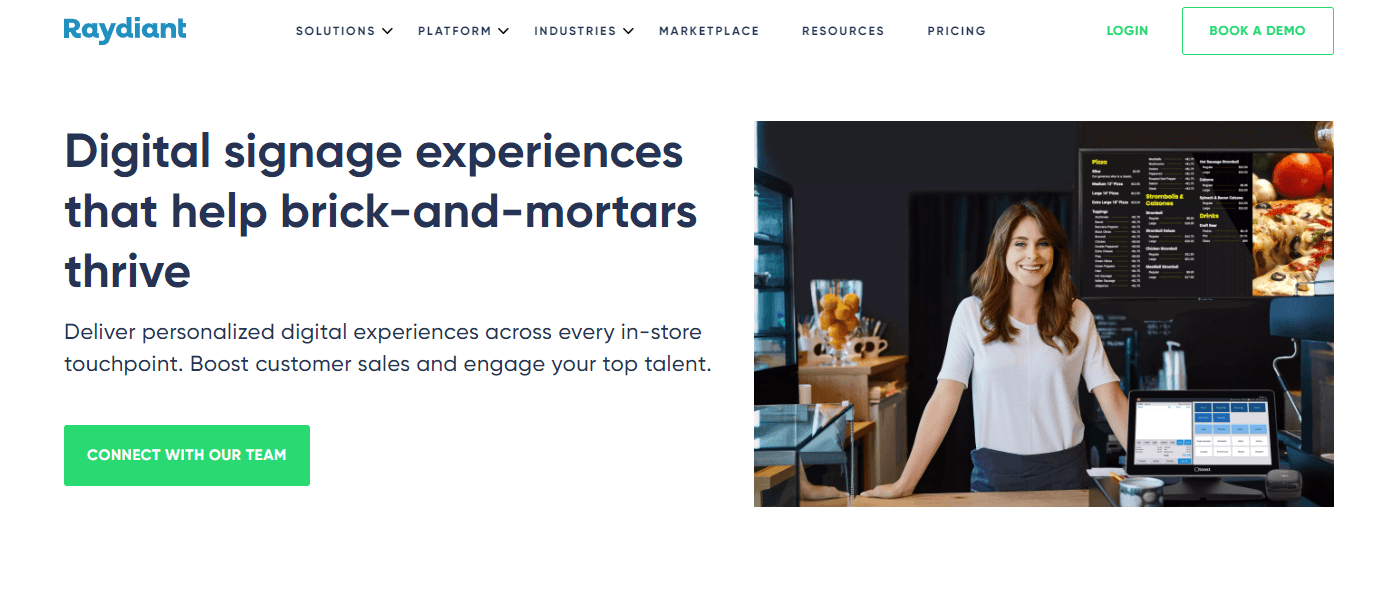
Raydiant is a feature-rich digital signage platform built to serve enterprise and multi-location businesses across industries like retail, hospitality, finance, and healthcare. Its plug-and-play hardware makes it easy to turn virtually any screen into a branded, dynamic digital display—no IT expertise required.
Where Raydiant really shines is content. Users can tap into a library of over 225,000 customizable design templates or collaborate with professional content creation partners to craft branded experiences. The platform also supports real-time integrations with platforms like Instagram and YouTube, allowing you to pull in fresh, relevant content automatically.
A centralized dashboard gives you full visibility into what’s playing and where, with real-time analytics to track performance across screens, making Raydiant a strong choice for enterprise environments that value both scalability and creative flexibility.
Top features:
Plug-and-play hardware for quick deployment
225,000+ design templates
Optional content creation services
Real-time analytics and screen performance tracking
Integrations with Instagram, YouTube, and other media platforms
Scalable for multi-location operations
Pricing: Raydiant offers custom pricing based on your business needs. Contact their team for an enterprise quote tailored to your deployment size and feature requirements.
6. ScreenCloud
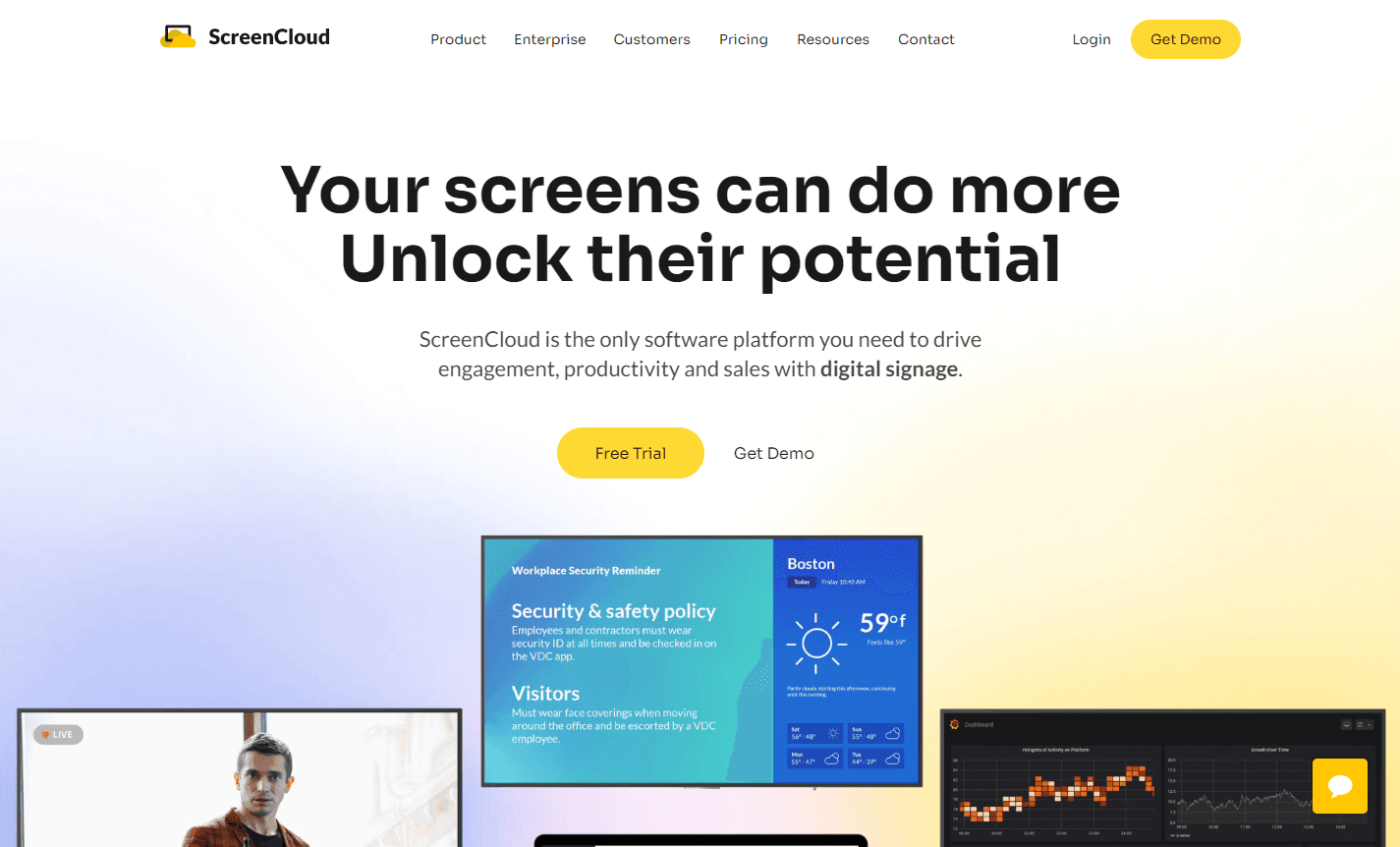
ScreenCloud is a versatile digital signage solution that bridges the gap between internal communication and customer engagement. Whether you’re displaying employee updates in a corporate office or running promotional content across multiple store locations, ScreenCloud offers the flexibility and control that enterprise teams need.
The platform supports a wide range of app integrations—like Google Slides, Instagram, RSS feeds, and weather widgets—so you can easily source and automate fresh content. Business users will also appreciate the built-in analytics and dashboards that provide insights into performance and content impact across locations.
ScreenCloud is built to scale and can support everything from small teams to global deployments, with management tools for user permissions, playlist scheduling, and screen grouping.
Top features:
Central dashboard for managing and monitoring all screens
Social media, weather, and productivity app integrations
Business intelligence dashboards and analytics
Supports both internal (employee-focused) and external (customer-facing) use cases
Video broadcasting and content scheduling tools
SSO and user role management for enterprise security
Pricing: The Core plan starts at $20 per screen per month. The Pro plan, which adds advanced features like SSO and dedicated support, is priced at $30 per screen per month. Enterprise plans with custom features are available upon request.
7. NoviSign
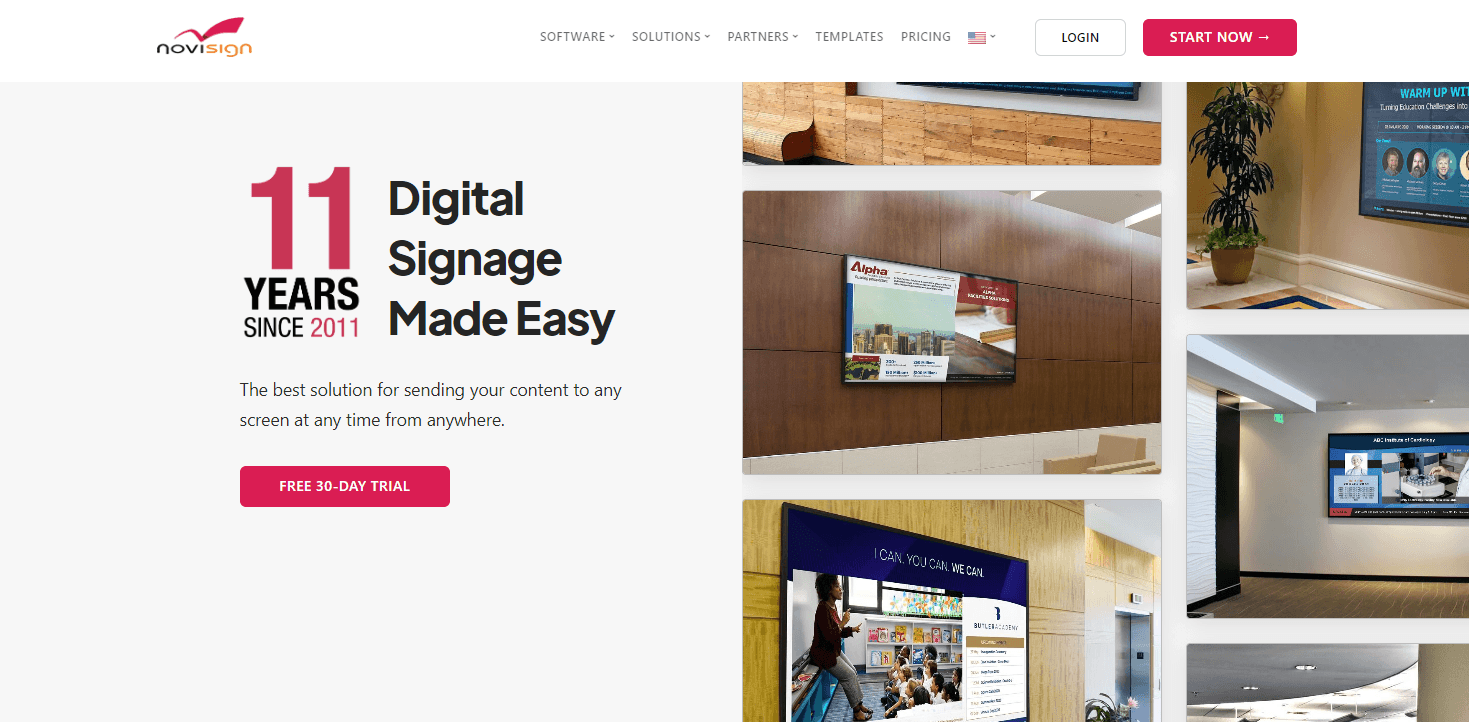
NoviSign is a flexible digital signage solution that serves a wide range of industries, from healthcare and hospitality to education and corporate environments. Its intuitive Signage Studio allows users to build engaging, custom content using a drag-and-drop interface—with widgets for slideshows, social media feeds, polls, live weather, clocks, and more.While NoviSign doesn’t support transactional kiosks, its interactive touchscreen displays are ideal for wayfinding, directories, and general information hubs in high-traffic areas like campuses, museums, or corporate lobbies.For teams looking to create branded, visually appealing experiences without needing a design background, NoviSign offers both simplicity and depth.
Top features:
Drag-and-drop content creation with built-in widgets
Support for social media feeds, RSS, weather, and world clocks
Interactive kiosks for non-transactional use (e.g., wayfinding, info centers)
Data dashboards for internal communications or performance tracking
Scalable platform for multi-screen and multi-location use
Pricing: NoviSign’s Business plan starts at $20 per screen per month. For branding and more advanced functionality, the Business Plus plan is $29 per screen per month. The Premium plan, at $49 per screen per month, unlocks features like white-labeling, custom fonts, advanced reporting, and unlimited users.4o
8. OnSign TV

OnSign TV is a feature-rich digital signage solution built with professional signage operators and large organizations in mind. It's ideal for teams managing multiple screens across locations who need flexibility, precision, and customization. The platform works seamlessly across all major operating systems and supports both browser-based and native playback.
With tools like multilanguage support, animated transitions, unlimited layout options, and an intuitive drag-and-drop editor, OnSign TV offers a high degree of creative control. The content management system makes organizing media simple through tags, categories, and reusable templates. Plus, custom services like integration support, training, and design consulting are available for enterprise clients.
This is a solid choice for businesses that need scalability and aren’t afraid of a more technical setup to gain advanced features.
Top features:
Fully featured CMS with tagging and categorization
Multilingual interface and content support
Compatible with smart TVs, browsers, and media players
Custom layouts with animation and design flexibility
Professional services available for setup and integrations
Pricing: The Professional plan is $19.99 per screen per month. The Enterprise plan costs $29.99 per screen per month, with discounts available for deployments of 25 screens or more.
9. Xibo
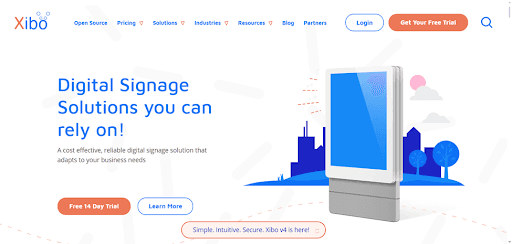
Xibo is a cloud-based digital signage solution that provides a content management system and app for running your digital signs. With the online content management system (CMS), you can create, upload, and schedule content for streaming to your display screens. You will then install the app on your screens and connect to the CMS to begin displaying your content. Xibo has apps for screens powered by Android, Windows, Linux, and other operating systems.
Top features:
Open Source foundation with community-driven innovation
Cost-effective digital signage with flexible licensing options
Cloud-hosted CMS for streamlined, remote content management
Cross-platform support for Android, Windows, Linux, and more
Intuitive layout editor and API for fully customizable experiences
Pricing:
Xibo’s cheapest plan costs £3.50 monthly per screen, while its priciest plan is £9.50 monthly per screen. However, users must pay a separate one-time license fee to get the software application for their display screens.
10. Play
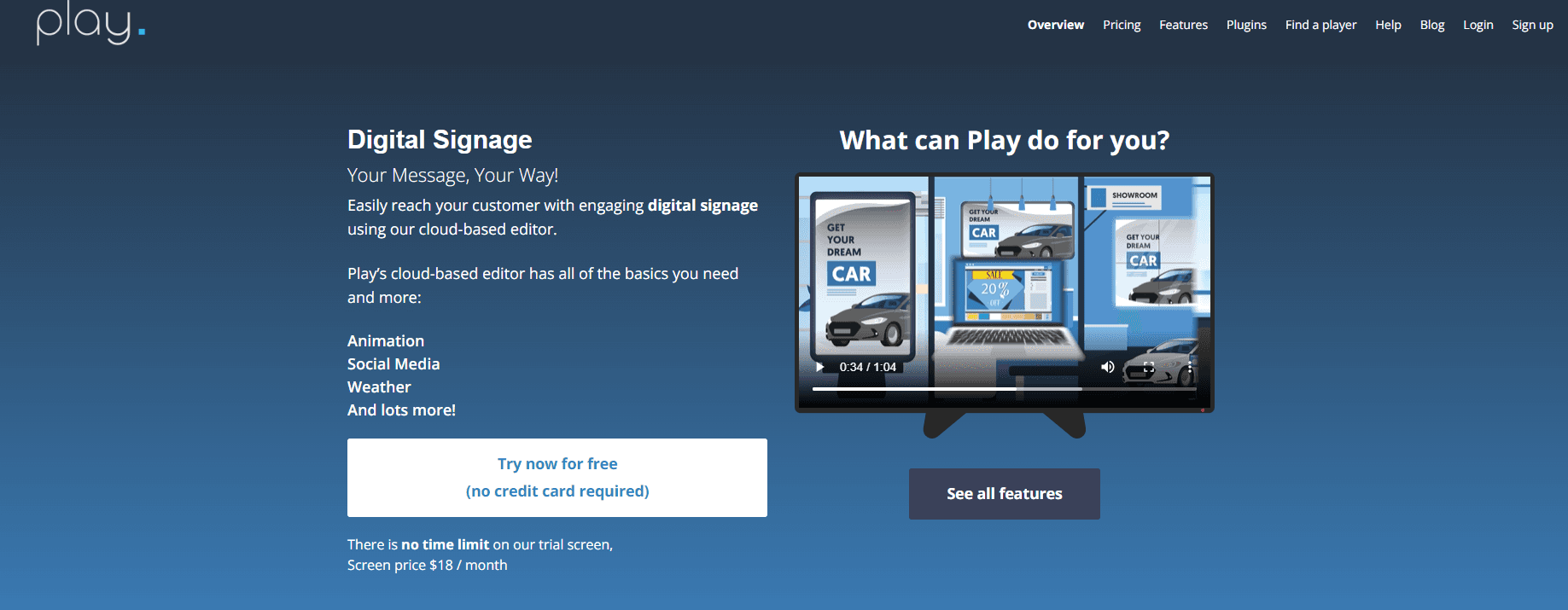
Play Digital Signage is a flexible and cross-platform signage solution that supports a wide range of operating systems—including FireOS, ChromeOS, Android, Windows, Tizen, and macOS. For screens that aren't internet-enabled, Play also offers plug-and-play hardware to get you up and running quickly.
The platform includes a built-in content editor for creating engaging visuals from scratch, or you can pull in live content from sources like YouTube, Instagram, Facebook, and news feeds. From the central dashboard, you can queue content, monitor screen status in real time, and manage deployments across multiple locations. Automatic software updates help ensure your displays stay current and run smoothly.
Play is ideal for companies that want both flexibility and full creative control without being locked into proprietary hardware.
Top features:
Works on nearly any operating system without extra hardware
Built-in editor for custom content creation
Supports social media feeds and live content integrations
Real-time dashboard for managing screen content and performance
Unlimited users and plugin access included
Automatic updates for ongoing reliability
Pricing: Play Digital Signage costs $18 per screen per month, with unlimited access to plugins and user accounts included at no extra cost.
The best Scala alternative for every use case
We know that choosing the right digital signage platform can feel like speed-dating for screens. But don’t worry, we’ve done the swiping for you. Whether you're running a small business, managing a sprawling enterprise, or setting up interactive kiosks, there's a perfect match on this list.
Best alternative for small businesses: Juuno
Juuno is a dream for small businesses who want big impact without a big budget. It’s browser-based, super intuitive, and doesn’t require extra hardware. Think playlist-style simplicity with powerful scheduling and social integrations that make your signage look pro with minimal effort.
Best alternative for enterprise companies: Userful
Userful is for the big leagues. If you're managing dozens or hundreds of screens across a secure network, this platform gives you all the tools you need. With real-time monitoring, robust API access, and cloud or on-prem deployments, it's a powerhouse built for scale and control.
Best alternative for kiosks: NoviSign
NoviSign makes interactive kiosks a breeze. It’s perfect for wayfinding, directories, and info screens in museums, campuses, or retail spaces. The drag-and-drop editor and widget-rich library make it easy to build touchscreen experiences that inform, delight, and occasionally wow your visitors.
Scala alternatives FAQs
Does Scala publish its pricing anywhere?
No. Scala uses a custom-quote enterprise sales model, and every third-party review site (Capterra, GetApp, SoftwareAdvice) confirms pricing is available on request only, with a rough $200-plus monthly starting point cited for smaller deployments. See the price comparison table above for an estimated range at different screen counts.
Is there a cheaper alternative to Scala for a small business?
Yes. Juuno starts at $5 per screen per month, a fraction of Scala's estimated enterprise-tier rate. The features that justify Scala's price, like on-premise deployment and proprietary hardware, usually don't matter if you're running under 20 screens, which describes the vast majority of Juuno's own customer base.
Are you looking for a Scala alternative that fits your budget, hardware, and content needs? Juuno is the best digital signage software for small businesses that want Scala's core capability without the enterprise price tag. Try Juuno today.


Darren Cummings
Co-founder, Design
Darren Cummings is Co-founder of Juuno, leading product and UX design. With 20+ years of design experience across the world's top advertising and design agencies, he's the reason Juuno feels nothing like enterprise software. He covers digital signage content and design for the Juuno blog, with a focus on helping businesses create screens that actually look good.
